Install the App
Add to your home screen for quick access
The Grief With No Funeral
The Grief With No Funeral is a self-guided Empower Recovery™ workbook for adults grieving the care they needed growing up or a family relationship they still wish could change. Packet 03 of The Unspoken Work of Recovery includes guided reflections, a plan for difficult days, and a reusable grief map you can work through at your own pace.
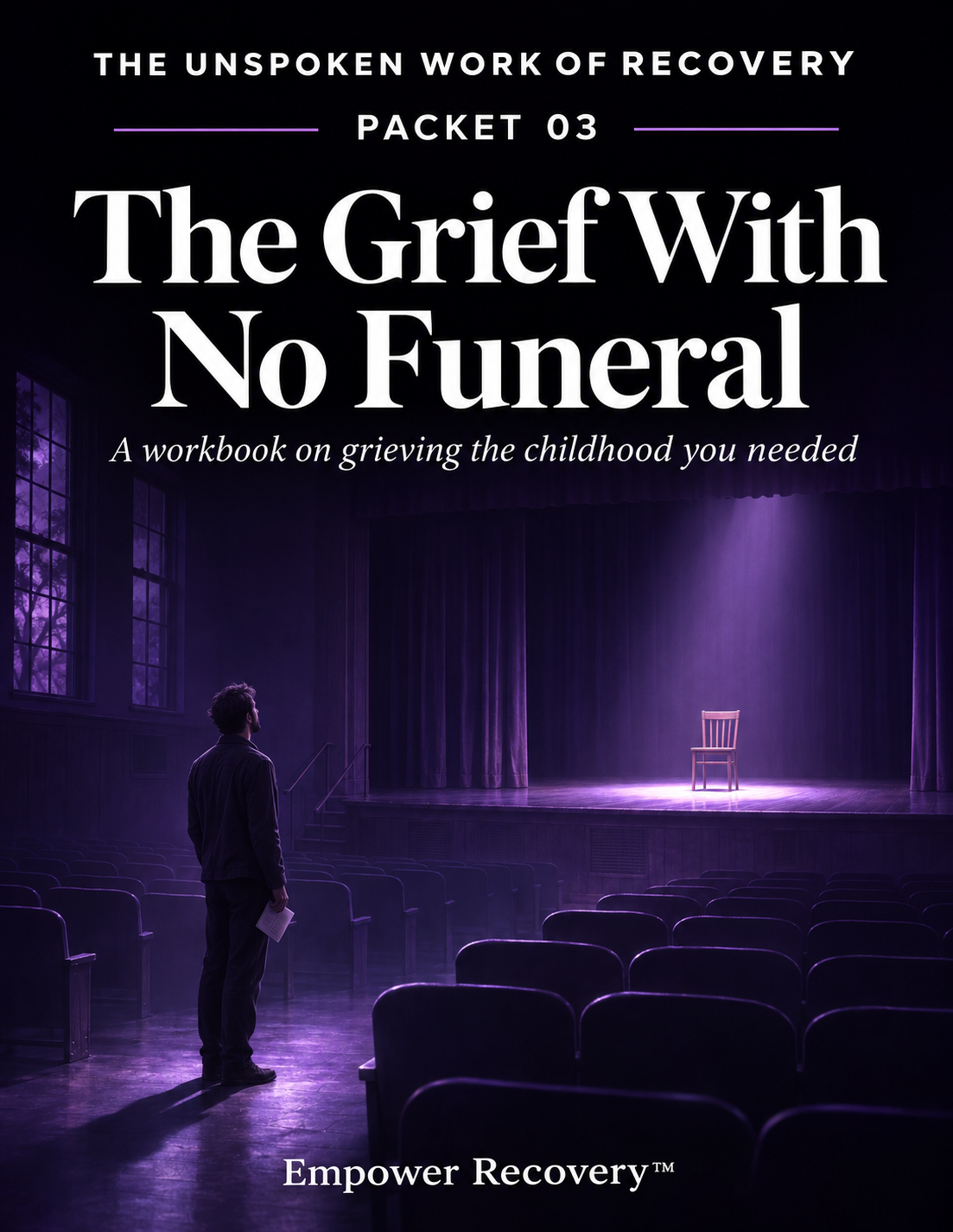
The_Grief_With_No_Funeral.pdf
Free download — printable self-help packet
How do you grieve a relationship you still have?
Your father calls on your birthday. He asks whether the car is running and tells you what the weather’s been doing. You tell him you’re glad he called, and you mean it. Before you hang up, you nearly ask whether he remembers the year you stopped wanting to come home after school. Then he says he ought to let you go. You hear yourself say, “All right. Talk soon.”
Afterward, you try to figure out what you wanted from the call. At first you think you wanted an apology. Sitting with it a little longer, you realize you would have settled for a question and enough time to answer it.
That can be a lonely kind of grief. From the outside, someone sees a father who remembered your birthday. You can appreciate that he called and still feel the weight of what has gone unsaid. Maybe you’ve heard, “That’s just how he is.” Maybe you’ve said it yourself. It can explain why a conversation keeps going the same way. It leaves open the question of what to do with everything you still want to say.
Start with what you hoped would happen. I wanted him to ask how it was for me. A sentence that plain can help you see why a perfectly ordinary call stayed with you. Then consider what experience tells you about the conversations you can have with him today. Perhaps you can talk easily about work and the car. Perhaps he goes quiet when you bring up the past. You can use what you’ve observed to decide what you want to share on the next call and where else you might want to be heard.
That might mean telling a friend, “My dad called for my birthday. I was happy to hear from him, and I’ve been sad ever since. Could I talk about it for a few minutes?” You can start there and see how much else you want to say. You may find that the person who listens can help you name what you’ve been carrying, even if they’ve never met your father.
The next time he calls, you may still hope he’ll ask. If he says, “Talk soon,” and you find yourself holding your breath for one more question, give yourself a moment after you hang up. There may be a sentence you want to write down, a friend you want to call, or a walk you want to take before you go back to your day. You get to choose what would help you feel less alone with it.
Share this resource